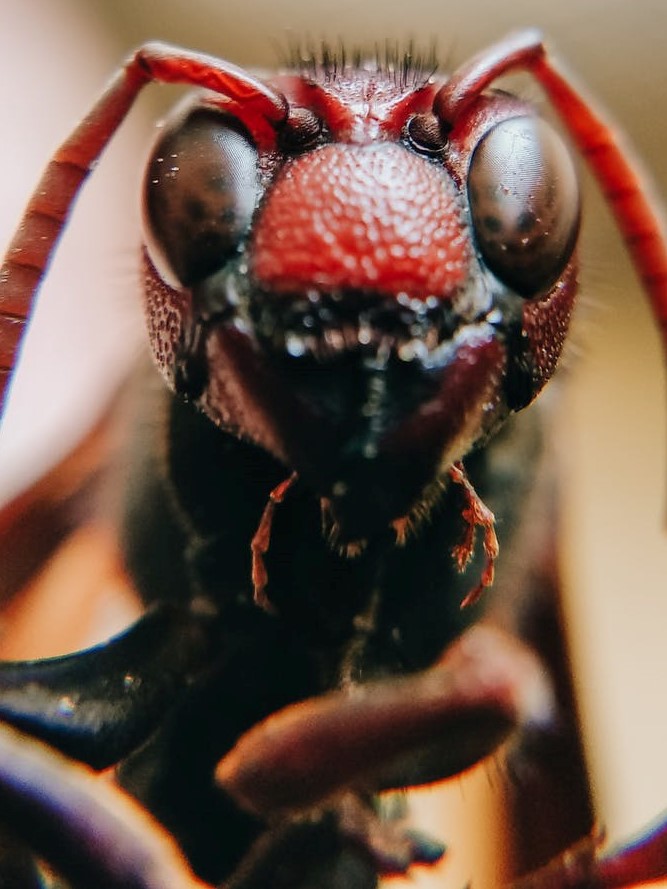
A fiery Freudian slip
Here we are again with The Antunite Chronicles poetry 101; or maybe it should be poetry 201 since we are moving on to the poems of book 2, The Rise and Fall of Antocracy. Some of you who have moved on to book 3, Antunites Unite, will notice that it doesn’t have any poetry. That’s because the story happened hexennia later, and Narrant was no longer the narrator, having passed on long before. Sorry Narrant, but even in fiction, characters only live so long. But Narrant was still the narrator of book 2, and I believe it was in The Rise and Fall of Antocracy when his poetry began to shine. Narrant just reminded me that I’m being a little aggrandizing, given that as a fictional narrator, he is my alter-ego. Well, I can still have favorites, can’t I? And the issues get more weighty, so the poems have more fodder. Well, let’s get into them. Here’s the verse for chapter one:
It’s an orb of unmatched beauty with folk of mighty brain.
Yet a land afire with averse and unrivaled beastly brawn.
And ne’er is power so combustible as that based on ego.
When one flames their id by mindless deeds that none would see as super.
This poem sets the scene for the entire book right from the first line. It highlights how, over the mega hexs, the planet has become a beautiful paradise and how the insects have become much more intelligent. Yet despite that high intellect, the insects’ basic instincts still fuel healthy aggression. Notice how, in the first two lines of the poem, Narrant shows off his growing expertise as a humanologist, contrasting beauty and beast and brain and brawn. Then, in the last two lines, he conveys his knowledge of psychological theory and the works of Sigmund Freud. The lines refer to how the megalomaniac tendencies of the book’s chief antagonist light a fire that seriously burns a good friend of the protagonist. Yet, Narrant delicately describes how Antilla’s growing ego or self-importance relies on his id or basic urges to please himself. Narrant then playfully concludes by stating that none would see his actions as super. The mischief in this line is that it means that characters whose egos still depend on actions that please their id are likely never to develop a super-ego. As Freud defined it, the super-ego is one’s conscience and empathy for others, which slowly develops as we move from moody childhood to emotional maturity. While Antilla is nearly an adult in chapter 1, he remains stuck at an early child-like stage of behavioral development. The events foreshadow that he may never reach a state of mature personality growth.
Push off from the slip
The second chapter of book two focuses less on Antilla and more on the intellectual development of the planet’s insects and their insatiable hunger for power and wealth.
Here is the poem for chapter 2:
As need sails windily into greed, a lust for industry, education, and avidity,
may list with gentry, stratification, and cupidity.
And careless tacks jibe assiduity to asinine, as one luffs all perspicuity.
As the planet Poo-ponic did not have oceans or large bodies of fresh water, Narrant was fascinated when he read about Earth’s seas and lakes. He imagined himself guiding across great bodies of water in a sailboat and learned all he could about sailing terms and lore. This love of all things nautical comes out in this poem, showing that, like great oceans with wave after wave, the rhymes of poetry do not need to happen only at the end of each line. The point of the chapter and poem is evident. Although diligence and desire can be laudatory aspirations when helping to overcome necessities, the promise becomes predatory as their purpose shifts to gluttony. Narrant played with words like sails, windily, list, tacks, jibe, and luffs to show off his knowledge and love of sailing. Then, in the spirit of his rhyming ancestors, he juxtaposed industry and gentry, education and stratification, avidity and cupidity, assiduity and perspicuity. He subtlety suggests inventors too proud of their talents can see themselves as aristocrats, scholars who flaunt their edification may feel they are above others, and leaders that allow eagerness to swing towards avarice can become so selfish that they lose clarity and their dutiful empathy for others. Narrant admits that he had to use the Funk and Wagnalls to look up all the “ity” words, so if you still don’t understand them, learn to use the Thesaurus.
Trees, turning, and terra
The third chapter returns to focus on Antilla, with his surprising candidacy and winning of the presidential election. After Anthiery had completed the design and construction of all cyborg insect families, Innovant and Renaissant were aged. When Innovant passed away, and Renaissant discovered he had little time to live, he stepped down as president. The opening poem reflects this looming change—the transition of societal power from insects to cyborgs and the shift of rule from a benevolent president who cherished democracy to a malevolent one who desired autocracy. Here’s the poem for chapter 3:
In family trees, we find contention.
The turning leaf attracts attention,
be it the end of the season or an era.
Find a solution, promote evolution, and defend the Constitution.
It’s a new direction, new deception, new ereption.
Climb or fell that verdant giant,
resist or flee the reign of terra.
Narrant wants to point out that the poem begins with trees because these towering giants become a focal point for the rest of the novel and because the insects dramatically altered their family trees within this chapter. And so, as leaves turning signifies the end of summer, the dramatic changes in societal structure and governance represented the end of an era. But a shift in direction always comes with risks, the threat that new inventions will create unforeseen problems and that a new leader with corrupt intentions may take the colony down the wrong path. Narrant again shows his love of unconventional rhyming schemes with the terms solution, evolution, and Constitution, all words that feature prominently in the chapter, or with direction, deception, and ereption, terms that foreshadow quandaries to come. Then again, some foreboding with the suggestion that felling trees may cause problems and that the desired ascension of the colony may be replaced by descension. Hard choices are coming. The reign of terra is wordplay not just to rhyme with era but also to foretell future issues with the land.